Wall Surfaces Ready for Final Finishes
Drywall Installation & Interior Finishing in McConnellsburg for homes needing seamless wall repairs and smooth surfaces for paint application
Drywall damage from plumbing leaks, furniture impacts, or structural settling creates visible imperfections that prevent clean paint application and signal potential moisture issues behind the wall surface. Interior wall repairs require matching existing texture patterns and ensuring that patches blend invisibly once paint goes on, work that demands both material knowledge and finishing technique. Fisher Renovations handles drywall installation, drywall repair, and texture matching in McConnellsburg when walls need reconstruction after renovation work or when isolated damage compromises appearance and structural integrity.
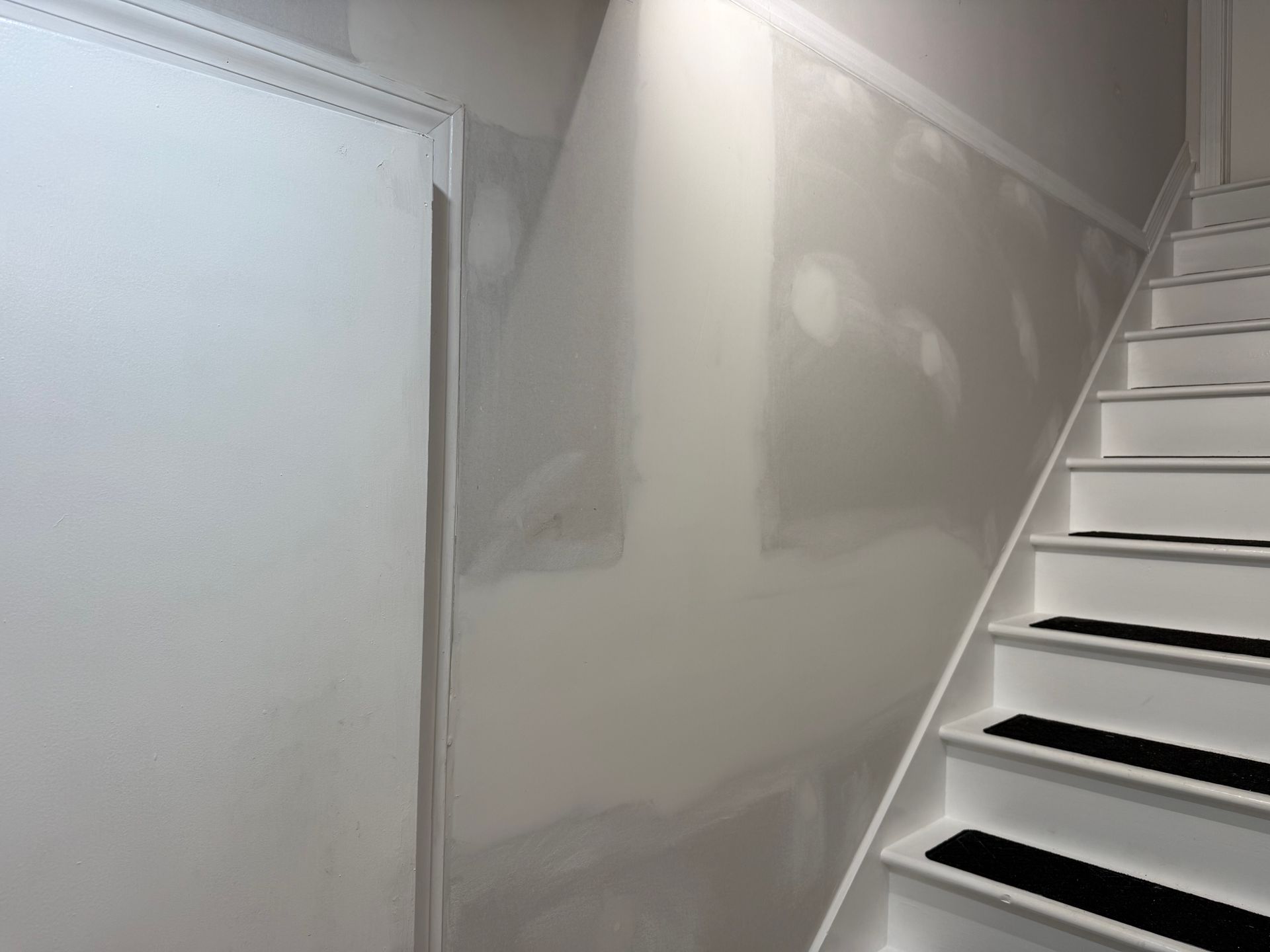
The repair process involves cutting away damaged sections, verifying that framing remains dry and sound, then installing new drywall secured to studs with screws spaced to prevent future cracking. Drywall finishing requires multiple joint compound applications with sanding between coats to create a surface smooth enough that imperfections do not show through paint, and texture matching recreates the existing wall pattern so patches disappear completely.
Arrange a damage assessment to determine whether isolated repairs address the problem or whether underlying moisture issues require more extensive work.
Why Texture Matching and Proper Finishing Matter
Drywall installation begins with accurate measurement and cutting to minimize seams, followed by screw placement that pulls the panel tight to framing without breaking the paper surface. Joint compound gets applied in progressively wider layers over taped seams, with each coat feathered farther than the last to eliminate the ridge that forms where compound meets existing wall surface. Texture matching requires identifying whether the existing finish uses orange peel, knockdown, or skip trowel patterns, then replicating that texture on the patch using similar tools and application techniques.
Once finishing work completes, you see walls that appear continuous and smooth without the shadows or ridges that reveal where patches were made. Paint adheres uniformly across repaired sections because the surface porosity matches the surrounding wall, and textured areas blend so completely that even direct lighting does not highlight the repair boundaries. Drywall finishing eliminates the telegraphing that occurs when joint compound applications are too thin or sanding does not extend far enough beyond the seam.
The service includes material supply and installation, but does not cover paint application unless arranged separately, since most homeowners prefer to select their own paint colors and handle that final step themselves. Interior wall repairs may reveal electrical wiring or plumbing that requires rerouting, work that Fisher Renovations coordinates but that falls under separate HVAC, plumbing, and electrical services.
What Homeowners Usually Ask
Property owners in McConnellsburg often need clarification on repair scope and finishing techniques before drywall work begins.
What causes drywall cracks to reappear after repairs?
Structural movement from foundation settling or truss uplift creates stress that exceeds the joint compound's ability to flex, which causes cracks to reform along seams. Proper repair involves securing framing to eliminate movement, not just filling the visible crack with compound.
How does texture matching work when patterns vary across the home?
Older homes sometimes show different textures in different rooms depending on when work was completed, which means each repair requires matching the specific pattern in that area. Fisher Renovations samples texture application on scrap material before applying it to the wall to verify that the pattern and depth match what already exists.
When does water damage require full drywall replacement instead of patching?
Drywall that remains wet longer than forty-eight hours often develops mold growth behind the paper surface, and even if dried it loses structural integrity once the gypsum core absorbs moisture. Full replacement becomes necessary when the material feels soft or shows discoloration that extends beyond the visible stain boundaries.
What makes drywall finishing smooth enough for paint?
Multiple thin coats with thorough sanding between applications create a surface where compound transitions gradually into the existing wall texture, eliminating the ridges that show through paint. Skipping coats or inadequate sanding leaves imperfections that become highly visible once paint sheen highlights surface irregularities.
How do Pennsylvania humidity levels affect drying time between coats?
Joint compound requires complete drying before the next layer goes on, and high humidity during summer months extends that timeline beyond the typical overnight wait. Rushing the process traps moisture between layers, which causes cracking and delamination once the material finally cures completely.
Fisher Renovations completes
drywall installation and interior finishing work that prepares walls for paint throughout McConnellsburg. Schedule a repair consultation to review damage extent and discuss whether isolated patches or more comprehensive wall replacement makes sense for your situation.